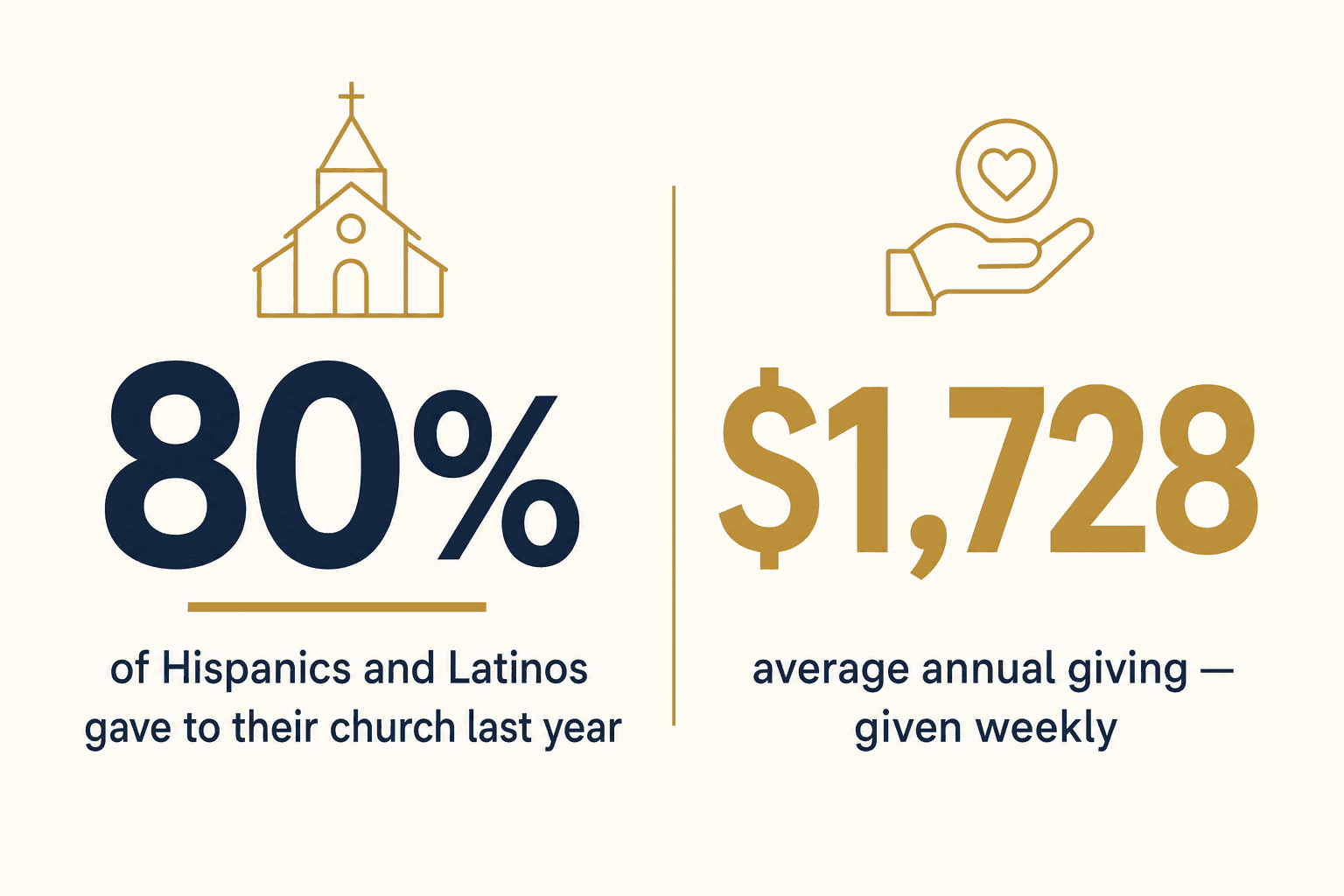
Eighty percent of Hispanics and Latinos gave to their church last year. Most never think of that as philanthropy, and most nonprofits never think of them as prospects. On average, that giving totals $1,728 a year, given weekly. If a donor in your own database gave $1,728 a year without being asked, you’d call them a mid-level donor with major-gift potential. The Latino market gives at that level constantly, and the fundraising field has simply not done the work to earn a share of it.
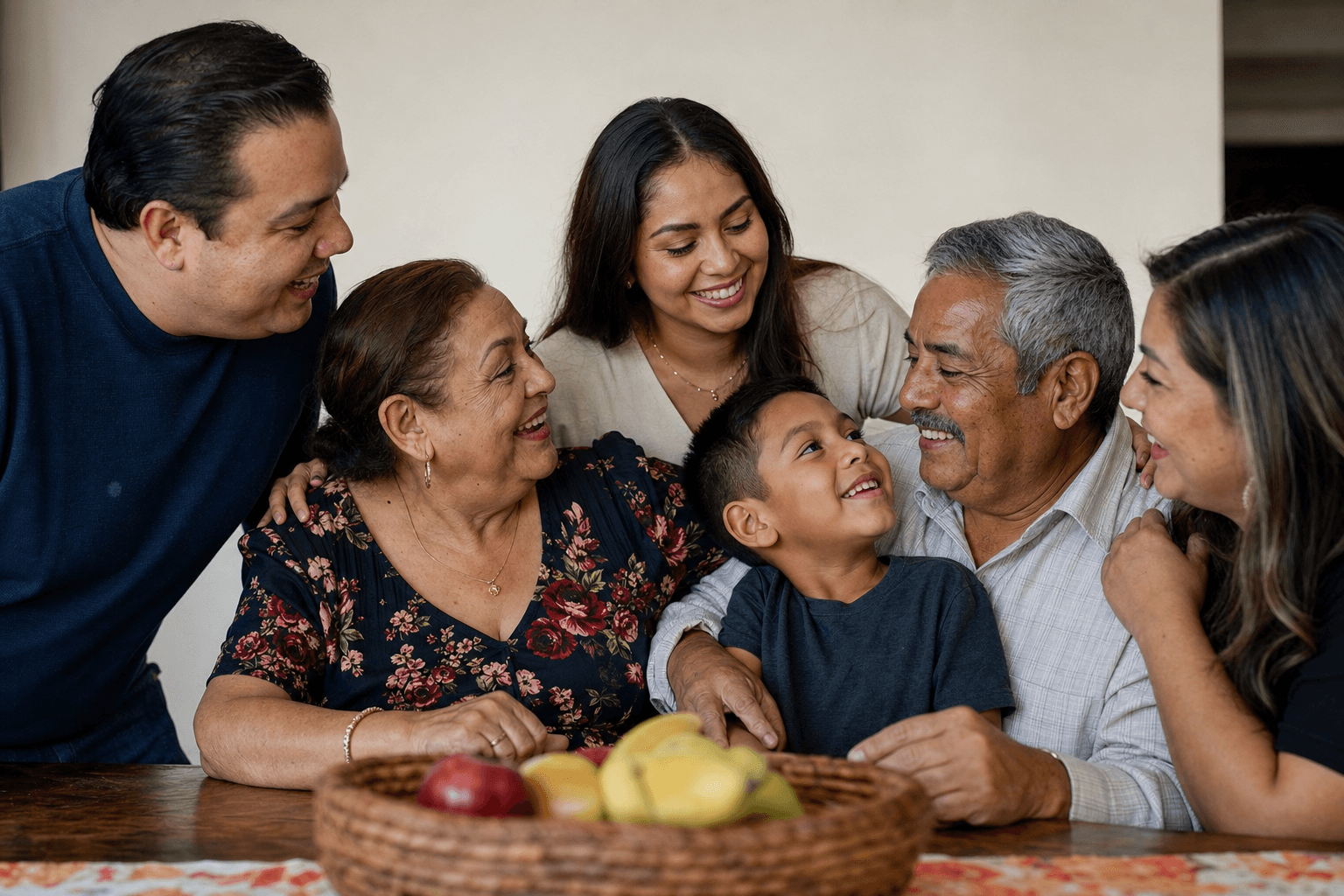
My mother asked me, for thirty-five years into my career, “do people really give?” And yet she gave every single week. We simply haven’t educated this market on the difference their gifts already make.
Four myths worth retiring
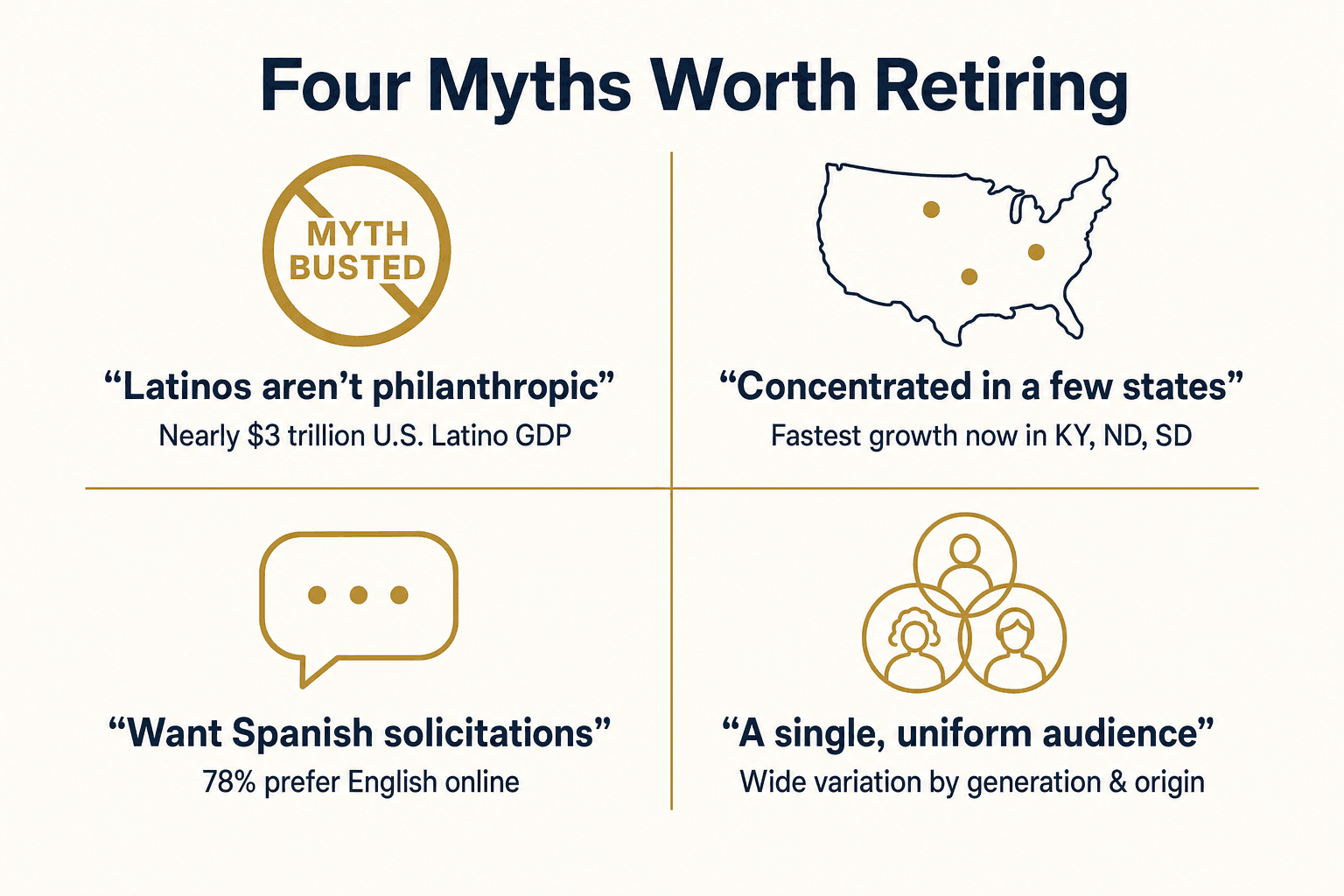
- “Latinos aren’t philanthropic.” The U.S. Latino GDP is nearly $3 trillion, which would rank as the world’s fifth largest economy on its own. Nearly 80 percent of net new U.S. workers between 2020 and 2030 are projected to be Latino. This is a market building wealth, not one on the sidelines of it.
- “They’re concentrated in a few states.” The traditional map, South Florida, Texas, California, New York, is outdated. Some of the fastest Latino population growth in the country is now in states like Kentucky, North Dakota, and South Dakota, following opportunity and jobs, not old assumptions.
- “They want to be solicited in Spanish.” 78 percent of Hispanics say they prefer English when interacting with digital devices, and that preference is even stronger among English-first and bilingual Hispanics. Defaulting to a direct Spanish translation of your materials can land as tone-deaf rather than welcoming.
- “Latinos are a single, uniform audience.” Political views, country of origin, generation, and language preference all vary widely. Treating this market as one-size-fits-all is the same mistake as treating any other donor segment that way, just at a much larger scale of missed opportunity.
Retire the term “Latinx” in donor communications
Only 2 to 3 percent of Hispanics and Latinos use the term “Latinx” to describe themselves, and roughly three-quarters have never heard it. In one 2023 survey of registered voters of Latin American descent, 68 percent preferred “Hispanic,” 21 percent preferred “Latino,” and 40 percent said they found “Latinx” offensive. The term was created with inclusive intent, but it replaces a Spanish word with an invented English one, and using it in solicitations risks alienating the very audience it was meant to include. Use “Hispanic” or “Latino” instead, reserving “Latinx” only for younger, Gen Z audiences who may identify with more inclusive language.
How to actually reach this market
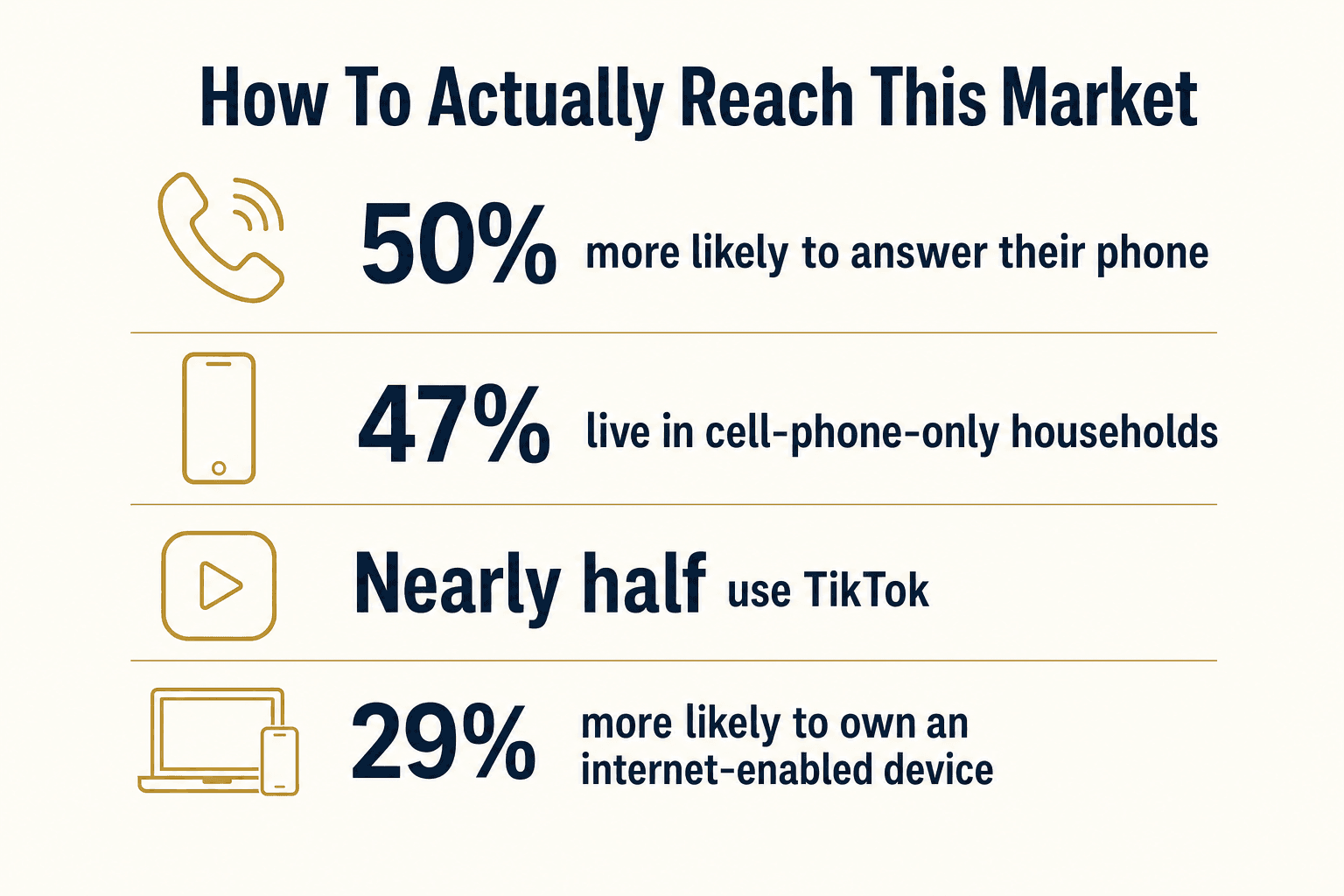
The channel data runs counter to a lot of assumptions. Hispanics are 50 percent more likely to answer their phone than the general population, and 47 percent live in cell-phone-only households. Nearly half of Hispanic adults surveyed use TikTok, well above other demographic groups, and Hispanics are 29 percent more likely to own an internet-enabled device than the population overall. The takeaway isn’t “pick one channel,” it’s to use all of them: phone, text, email, and social media all outperform expectations with this audience, provided the message is personal rather than mass-produced.
Lead with family, community, and tradition
Giving decisions in Latino households are frequently made as a family unit, not by one individual acting alone, so appeals that speak to the whole family tend to land better than ones addressed to a single donor in isolation. Peer-to-peer solicitation is especially powerful: a letter drafted from an interview with a Latino donor or board member, signed over their name, telling their own story of why they give, consistently outperforms an institutional appeal. And because many Latino donors are accustomed to giving weekly at church, a monthly sustainer ask is often an easier, more natural fit than a single annual gift.
Donor loyalty isn’t about the donor being loyal to us. It’s about us being loyal to the donor, reaching out the way they want to be reached, not the way that’s easiest for us.
Practical tactics worth testing
- Crowdfunding. Latino donors are roughly twice as likely to give through crowdfunding and peer solicitations at church or community events, a habit many already practice when supporting family or disaster relief back home.
- Church partnerships. Asking a local, predominantly Latino congregation for a few minutes to speak about your mission after service works more often than most fundraisers expect, and it’s a channel many organizations never think to try.
- Latino giving circles and donor advisory panels. A Zoom-based advisory panel of Latino donors, thanked and asked what motivates their giving, builds a networking opportunity for them and a pipeline of insight and future board candidates for you.
- Recipient testimonials on video. A short phone-recorded testimonial from someone whose life was changed by the organization, shared on social media, mirrors the public thank-you moments common in many Latino churches and resonates the same way in a donor appeal.
Seven words to frame any case for support
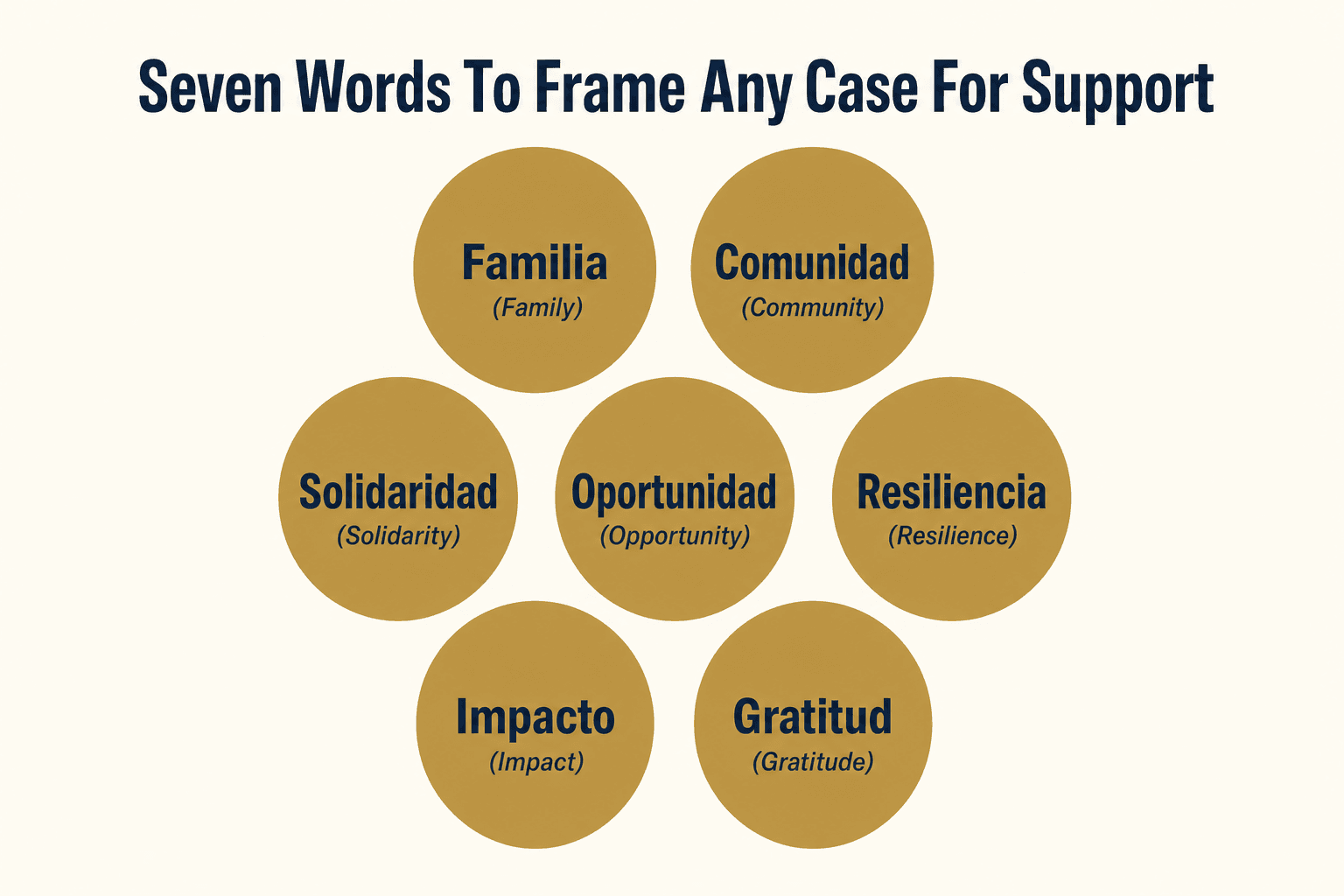
Familia (family), comunidad (community), solidaridad (solidarity), oportunidad (opportunity), resiliencia (resilience), impacto (impact), and gratitud (gratitude). Nearly any nonprofit’s mission, whether it’s a university opening doors for first-generation students, a hospital treating patients, or a human-services agency feeding families, can be framed through these seven ideas. The most effective appeals Catapult has seen with this audience don’t rely on Spanish-language translation to connect, they rely on speaking to what already matters most: family, community, and the chance for the next generation to go further than the last.
Want help building a case for support and outreach strategy that genuinely resonates with Latino and Hispanic donors? Start a conversation with Catapult Fundraising.