
Aim for at least seven touchpoints with a donor over the course of a year, and make sure most of them have nothing to do with asking for money. Every one of these is a genuine two-way exchange: an opportunity to learn what a donor thinks, what motivates their giving, and what would make them feel more connected to the mission, information that makes every future ask sharper.
Every single person you speak with should walk away feeling good about the institution. If we do that effectively, the money follows.
“Five by ten”: a habit, not a program
Call five donors every morning before 10am, donors who would not normally be assigned as major gift prospects: someone who has given $25 a year for two decades, a mid-level donor overdue for attention. No ask, just a genuine check-in. Organizations that adopted this habit have repeatedly seen those overlooked mid-level donors jump from four-figure annual gifts to $10,000 or $20,000 gifts, simply because someone finally called. Twenty- five calls a week, reaching maybe ten conversations, is enough to keep a real pipeline of engaged mid-level donors moving toward major gift status.
Low-cost touches that outperform another appeal letter
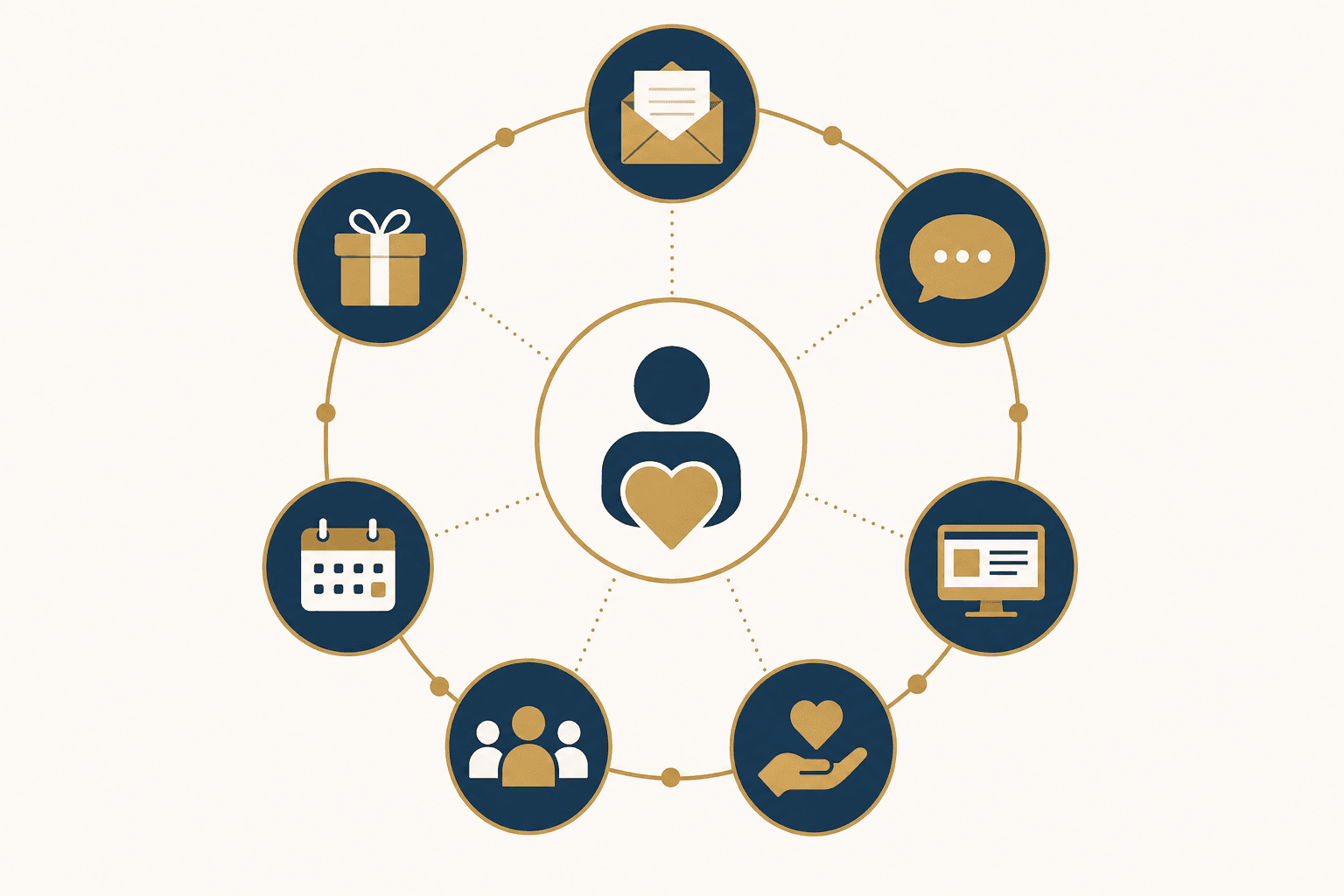
- A thank-you call after every event to open a dialogue about what worked, not to solicit. Donors are consistently glad to be asked their opinion, and some send unsolicited gifts afterward simply because they appreciated the call.
- Electronic anniversary and birthday cards, sent with zero ask attached, just gratitude and a reminder of impact.
- Digital voicemail drops from the CEO or a student/beneficiary, a message that lands directly in voicemail without ringing the phone, at a cost of roughly 5 to 10 cents per message. It should sound personal, not scripted, as if that person genuinely picked up the phone.
- Small virtual town halls or donor advisory panels, run quarterly on Zoom, even with as few as ten attendees. Donors interact with each other about why they give, generating more insight than any wealth-screening tool, and unsolicited gifts often follow.
- Impact tours and beneficiary stories, inviting mid-level donors behind the scenes and letting the people directly impacted tell their own story in their own words.
Retiring the myths about the phone
Telephone fundraising still gets dismissed as a dead or irritating channel, but the data doesn’t support that. Roughly 60 percent of people still answer their phone when it isn’t flagged as “scam likely,” a reach rate that beats most other channels for genuine two-way conversation. Nonprofits are also exempt from the national do-not-call list when contacting people with an existing relationship to the organization. What actually killed the reputation of phone fundraising was the technology: predictive dialers, robocalls, and scripts read at strangers. The fix isn’t abandoning the phone, it’s using it the way a good major-gift officer would: with research, a real conversation, and a caller who isn’t afraid to make the ask.
Don’t call everyone, call the right 5,000
A common mistake is trying to call an entire database at once. Segment first, and start with the group you can actually call well. One long-running client program ended up with over 200 unique data segments, each with its own message, because a message that lands with a recent graduate rarely lands the same way with a donor from forty years earlier. Pre-call letters, ideally two to three pages, longer letters consistently outperform short ones in testing, should tell the story from a donor’s perspective and set up the caller as a facilitator continuing that story, not a stranger asking cold.
Want help designing a touchpoint calendar or a segmented calling program for your donor base? Start a conversation with Catapult Fundraising.