By Anthony R. Alonso, President & CEO, Catapult Fundraising

Let’s be honest. For a lot of fundraisers, “planned giving” sits somewhere between awkward and please-don’t-make-me. You’ve built a real relationship with this donor. You know their dog’s name. You’ve sat through the vacation photos. And now you’re supposed to bring up what happens after they die?
Yes. You are. And here’s the good part: August is National Make a Will Month, so the calendar just handed you a low-pressure reason to finally start that conversation.
Let’s talk about why planned giving matters, why fundraisers keep dodging it, and why the donors you’re most nervous to ask are often the ones most ready to say yes.
Let’s Look at the Numbers
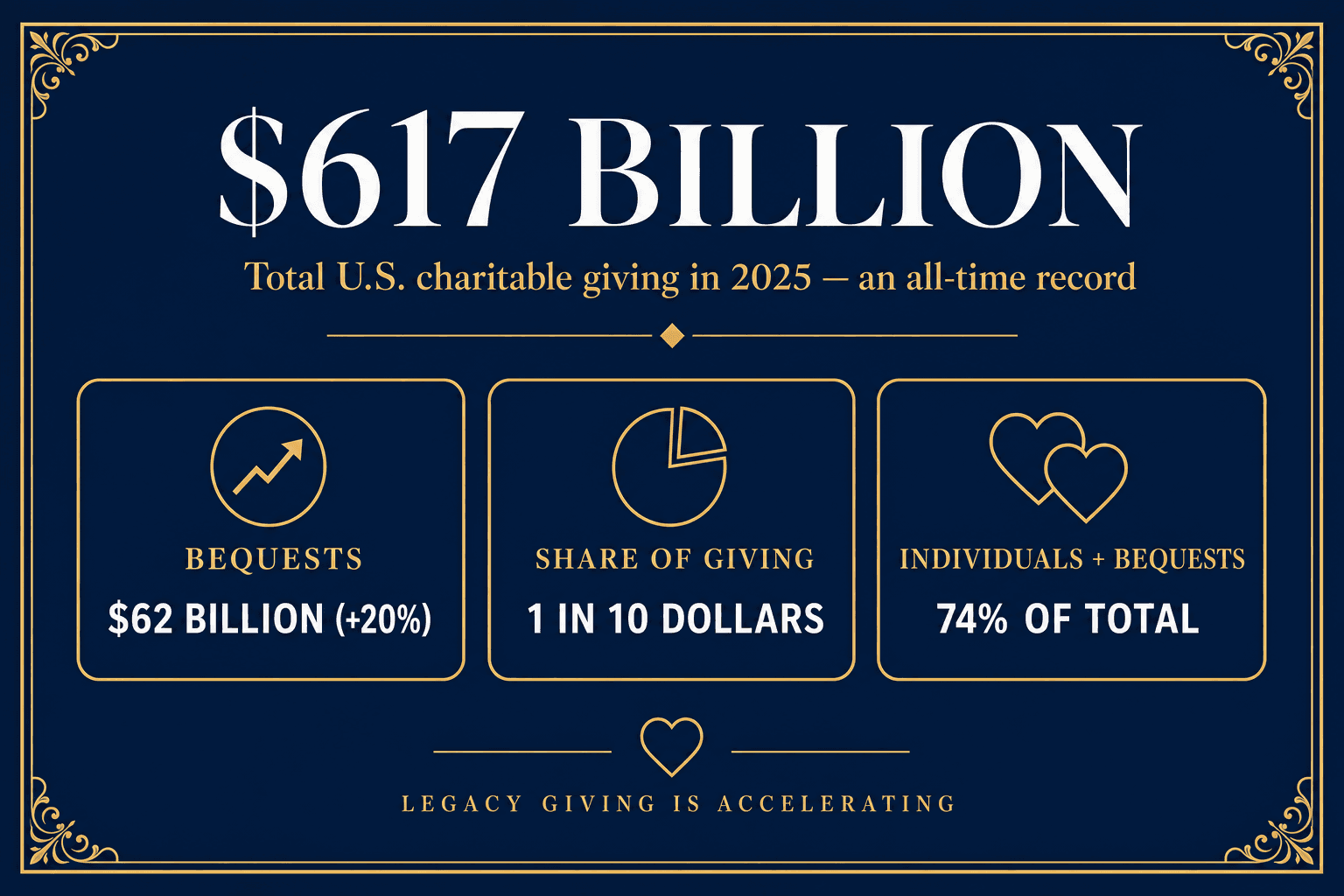
According to Giving USA 2026, Americans gave a record $617 billion to charity in 2025, the first time total giving has ever crossed $600 billion. That works out to roughly $1.7 billion a day. Individuals and bequests together made up 74% of every charitable dollar given last year.
Here’s the number that should stop you in your tracks: bequest giving hit an estimated $62 billion in 2025, up 20% from the year before. Bequests now account for 1 out of every 10 dollars given to charity. And this isn’t a one-year fluke. Bequests have grown 20% or more, in current dollars, in three of the last four years.
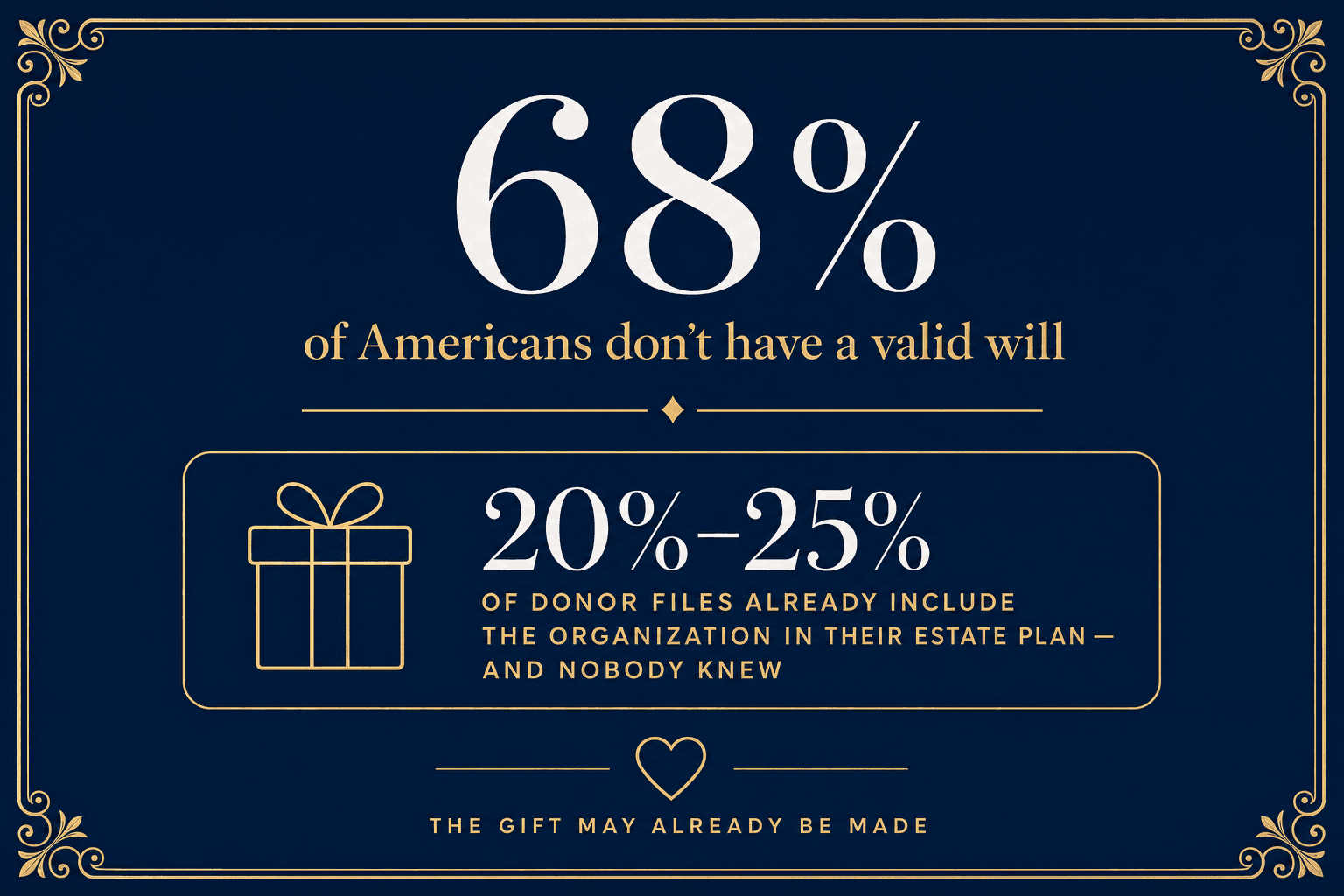
Now pair that with this: more than 68% of Americans don’t have a valid will. That’s not just a problem for estate attorneys. That’s a fundraising opportunity sitting out in the open.
And here’s one from our own work that should make every development director sit up straight: in Catapult’s experience, when we call through a nonprofit’s donor file, we typically find that 20% to 25% of prospects have already named the organization in their estate plan, and nobody at the organization knew. They made the gift. They just never told anyone.
Why Fundraisers Keep Avoiding This
Talking about death is uncomfortable. Talking about money is uncomfortable. Put them together and it’s the kind of topic that clears a dinner party.
But the real reason most fundraisers avoid the planned giving conversation isn’t squeamishness. It’s a quiet belief that asking a loyal donor about their estate plan is presumptuous, or that it’ll make them feel like you’re waiting for them to die.
I think we’re looking at the conversation the wrong way. We’re not asking a donor to talk about dying. We’re asking someone who has supported the organization for 10, 20, or 30 years whether they’ve thought about what they want that support to accomplish after they’re gone. That’s a very different conversation.
After 40 years in this business, the core truth hasn’t changed: the job is connecting a donor’s belief in a cause to a compelling, human reason to give.
Legacy gifts, scholarships, endowments, named spaces, the impact stories are the point. The bequest conversation is just the vehicle that gets you there.
What a Good Planned Giving Program Actually Looks Like
You don’t need a full-time gift planning officer, a law degree, or a budget line that makes your CFO wince. You need a thoughtful approach, decent data, and the willingness to pick up the phone.
Here’s how we structure it for clients at Catapult:
- Tier 1: Warm outreach. Experienced engagement professionals call to thank donors and open a conversation. No pressure, no legal jargon. The only goal is finding out whether a donor has already included the organization in their estate plan, and whether they’d like to learn more.
- Tier 2: Gift planning specialists. Donors who show interest get connected with seasoned planned giving professionals, usually retired gift officers with 20-plus years of experience. These aren’t call center staff. They’re fundraisers who’ve closed thousands of planned gifts and can walk someone through everything from a simple bequest to a charitable remainder trust.
- Pre-call letters. Every outreach starts with a personal letter from a trusted community figure, ideally a donor who has already made a planned gift and can speak to it honestly.
The results back it up. In our experience, a well-run program reaching 1,000 prospects can generate $1.2 million to $1.7 million in closed planned giving commitments. One national TV ministry we worked with topped $12 million. And the cost is less than hiring a single planned giving officer for a year.
Who Should You Actually Be Talking To?
Not every donor is a planned giving prospect, but the signals are clearer than most fundraisers assume.
Look at donors who’ve given consecutively for 10-plus years. Look at people who give modestly each year but whose wealth screening suggests a lot more capacity. Look at long-time subscribers, members, and volunteers who have never once been asked about their estate plans.
Here’s something we’ve learned working with hundreds of organizations: a surprising number of your most loyal donors have already written you into their wills. They just assumed you knew. The discovery call isn’t an ask. It’s a thank-you with a question attached.
What Donors Can Actually Give
Planned gifts come in more forms than most people realize, and you don’t need to be an expert in all of them. The most common, accessible options:
- Bequests, a percentage or dollar amount left in a will or trust
- Beneficiary designations on retirement accounts, life insurance, or bank accounts
- Charitable gift annuities, which pay the donor income for life
- Charitable remainder trusts, which benefit both the donor and the organization
The message to give donors: they don’t have to be wealthy to do this. They just have to care. And if they’ve been giving to your organization for years, they already do.
And Don’t Forget the Endowment
Planned gifts are also the foundation of endowment growth, and endowments are how nonprofits stop living campaign to campaign. A bequest directed to an endowment can support that program for generations instead of funding it just once.
That’s a conversation worth having with your board and your longest-standing supporters, not as a pitch, but as a vision. What would it mean for your mission to have a permanent financial foundation? What could you do that you can’t do today?
Make August Count
National Make a Will Month isn’t just a calendar entry. It’s permission. Permission to send the email you’ve been drafting in your head for six months. Permission to call the donor who’s been giving since before your current ED was hired. Permission to say, “We’d love to talk to you about your legacy.”
You don’t need a script full of legal terms. You need warmth, honesty, and a genuine belief that the work your organization does deserves to be carried forward.
Bequest totals move around year to year depending on estate settlement timing, but the long-term pattern is clear: planned gifts are one of the most reliable sources of support a nonprofit can build.
The donors who love you most are usually just waiting to be asked.
Catapult Fundraising helps nonprofits launch and scale planned giving programs through a proven two-tier calling model. If you’d like to talk about what a legacy giving program could look like for your organization, we’d love to start the conversation.
Sources: Total giving, bequest giving, and giving-by-source figures are drawn from Giving USA 2026 (reporting on 2025 data), Indiana University Lilly Family School of Philanthropy, with analysis support from Stelter. Prospect-identification and program-performance figures reflect Catapult Fundraising’s own client experience and are not industry-wide statistics.