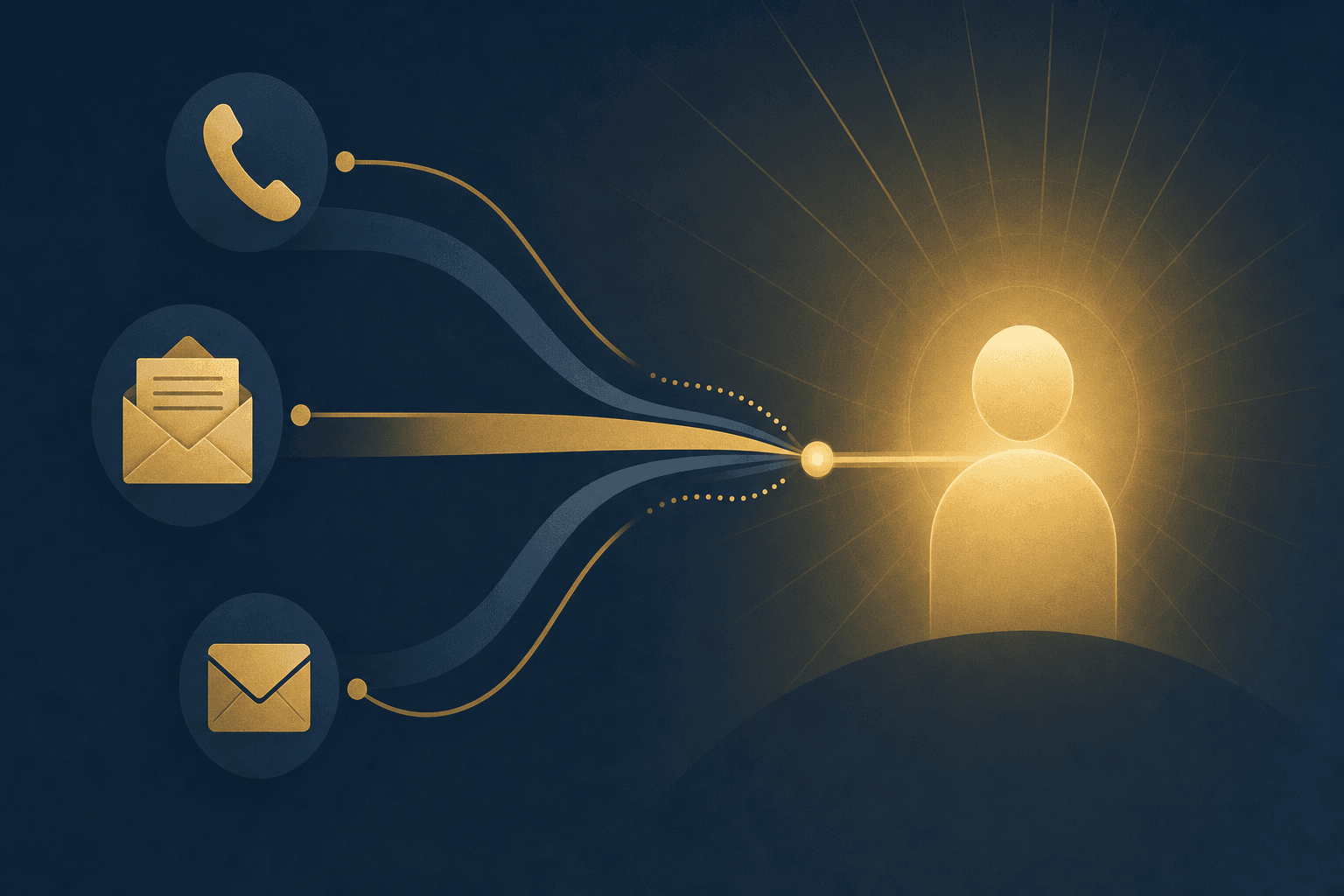
We’ve all heard about multi-channel fundraising by now, and most nonprofits are, in-fact, using a variety of channels to solicit gifts. Fundraising is not about choosing one or two channels and hoping for the best, but rather, utilizing all available methods of donor engagement, stewardship and solicitation to maximize your fundraising revenue and build a pipeline for major gifts.
Over the last five years, we’ve heard of countless institutions switching gears to focus the majority of their annual fund solicitation efforts on digital fundraising methods, including:
- Social media
- Text to give
- Crowdfunding
These are great tools, especially to reach the masses and for donor acquisition, but where will this path lead you in 3 years? Or even 5 or 10 years?
Two questions to ask yourself when planning for any type of solicitation: “How will I upgrade my donors?” and “How will I build a major gift pipeline?”
Digital fundraising is a great way to secure a large number of smaller gifts and hype pocket projects, but where do you go from there? Are your email and text message solicitations, crowdfunding campaigns, Facebook birthday fundraisers or social media posts building long-lasting relationships with your donors? No. Do these methods of digital fundraising give us the opportunity to upgrade donors? They definitely do not.
So how do we create a process to ensure your donors are on board for the long haul? Every nonprofit needs a comprehensive, multi-channel fundraising program that appeals to their entire base. Effective fundraising requires a great deal of planning and strategizing on these key areas:
- Database segmentation
- Personalized outreach
- Appeals tailored to each segment
- Solicitation and stewardship strategy across channels
Let’s start with the basics.
1. Know Your Audience
How you solicit Millennials is going to be very different from the way you solicit Baby Boomers. You need to tell different stories and ask for different gift amounts (do not send a solicitation without an ask). While studies show direct mail is a favorable method of solicitation for Gen Z, don’t forget they likely don’t own a check book, so be sure to have a QR code to scan. On the flip side, Millennials and Gen X are your best audience for email solicitations.
Analyze your database to find moderate givers who’ve consistently supported your organization for years. These individuals may never make their way to a major gifts officer’s portfolio, but we need to pay special attention to this group. Their love and dedication to your cause should be acknowledged with some face time. Have you considered this group to be potential legacy donors? Perhaps they already have you in their will? The only way to find out is ask them.
Another unique group to keep your eye on are those who consistently engage with you on social media. This group is your biggest fan. Take a few minutes to get to know them and build a relationship. These are your nonprofit’s social media “influencers.” Their likes, follows and shares are going to help spread your word and acquire new donors.
The second most effective way to upgrade donors, tried and true for decades, is a highly personalized phone program. When done right, a phone call will strengthen the individual’s bond with your organization, secure an upgraded, multi-installment gift, and create a pipeline of major gift prospects. But what does “when done right” actually mean?
2. Get Crafty With HTML
Being the consummate professional that you are, you wrote a solicitation email and included a specific ask amount based on your donor’s previous giving history. Since digital fundraising makes it nearly impossible to systematically upgrade your donors, you got creative by asking John Smith for last year’s gift, but on a quarterly basis, upgrading him by four times this year.
Let’s make the giving process as easy as possible for our donors. With that being said, by getting crafty with the HTML in your giving portal, when John clicks the link to give in his email (or text message) your giving page will load pre-populated with John’s record information: name, address, requested gift amount, frequency, phone and email. This is a seamless process for the donors to make their gifts and update their information, when necessary.
3. Tell a Good Story
Similar to using different solicitation methods depending on age group, you also want to craft stories and appeals for your specific audiences as well. What you need to keep in mind is the great reward that will follow. Get to know your audience, take your time, and the return will be worth it.
You probably have several “audiences” in your database who connect with your organization for different reasons. You have all ages, economic levels, different geographical areas and different time zones in your solicitation pool. We usually refer to these as different segments. It is difficult to solicit all of these segments en masse. They will need unique approaches and stories. One size doesn’t fit all in fundraising.
4. Once We’ve Acquired, How Do We Upgrade?
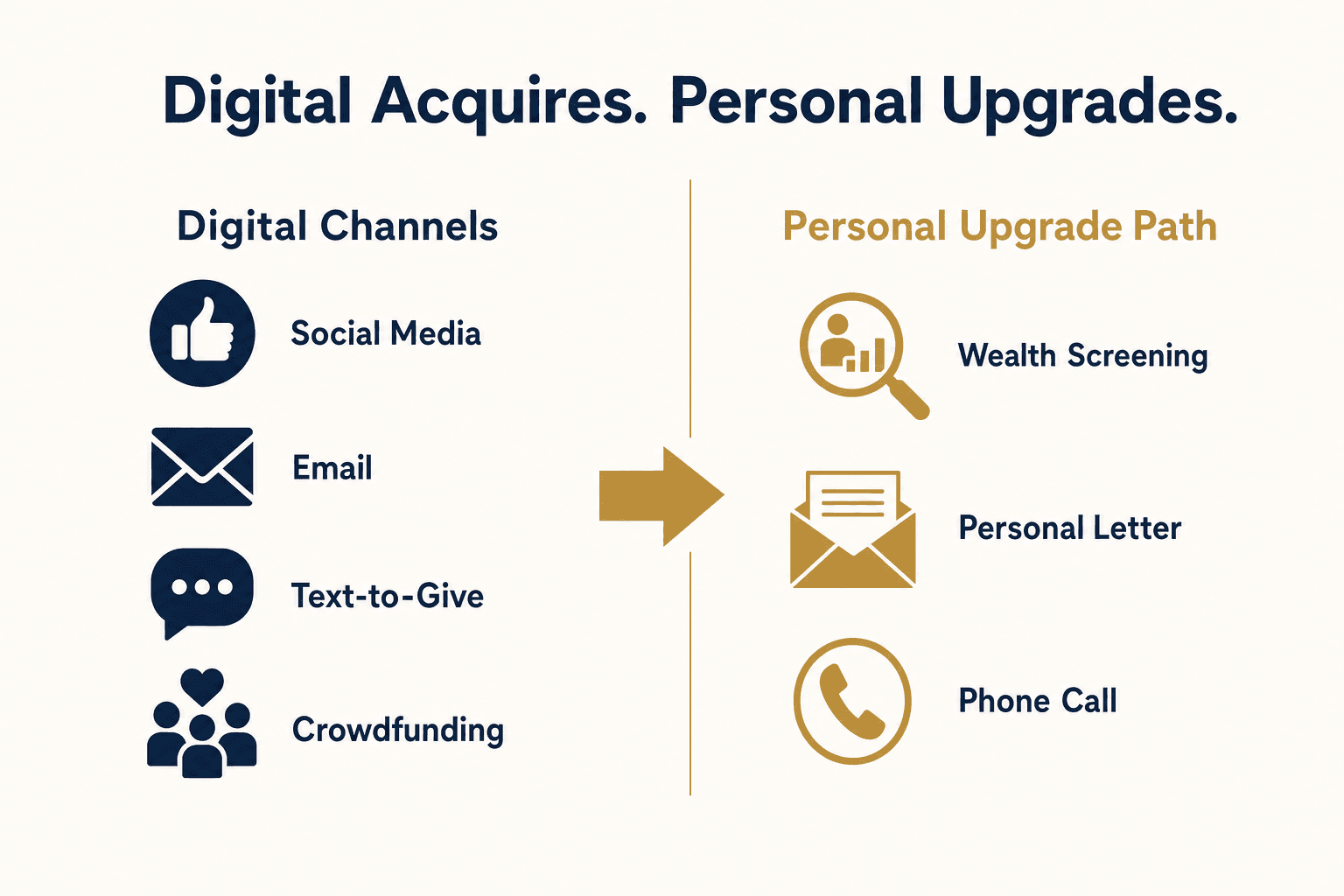
As we’ve established, digital fundraising is an incredible tool for donor acquisition or special events like giving days, but think about the long-term plan for your supporters. What personal touchpoints or solicitations will you use to keep moving your donors up the giving ladder? The first method to upgrade is through face-to-face visits, no longer a method that should be reserved for major gift prospects.
The second most effective way to upgrade donors is a highly personalized phone program. Here’s a three-step approach that works:
Step 1: Assign the Right Ask Amounts
Do your research through wealth screenings to find out what you should be asking for. We want donors to get used to seeing your organization’s name on their monthly credit card statement.
Step 2: Prime the Ask With a Personal Letter
Send an emotional, compelling message via email or mail ahead of the call. It legitimizes the call and gives each person time to think about the ask amount mentioned in the letter.
Step 3: Make the Call Count
Face-to-face visits and telephone calls are the most personal tools in our arsenal. It’s not all about the ask, invest the time to bond with these individuals.
Consider these as conversation starters:
- How did you first become involved with the organization?
- I see you've been supporting us for the last ten years. Wow! Thank you! Tell me what inspires you to give year after year.
We’re not reading a script here and diving into an ask. Get to know the person on the other end. They are, in fact, the lifeblood of your organization.
While digital fundraising has greatly enhanced the way we do our jobs, we need to remember that these tools should be used to compliment other methods that have withstood the test of time. Fundraising is all about relationships, and it takes a personal approach to nurture them.
Want to build a comprehensive, multi-channel fundraising program for your organization? Start a conversation with Catapult Fundraising.