By Anthony R. Alonso, President & CEO, Catapult Fundraising

$617.2 billion. That’s how much Americans gave to charity in 2025, a new record, according to Giving USA. The Giving USA 2026 report, released this June, confirms what many of us hoped: total giving grew 5.7% in current dollars, 3.0% adjusted for inflation, surpassing $600 billion for the first time in the report’s history.
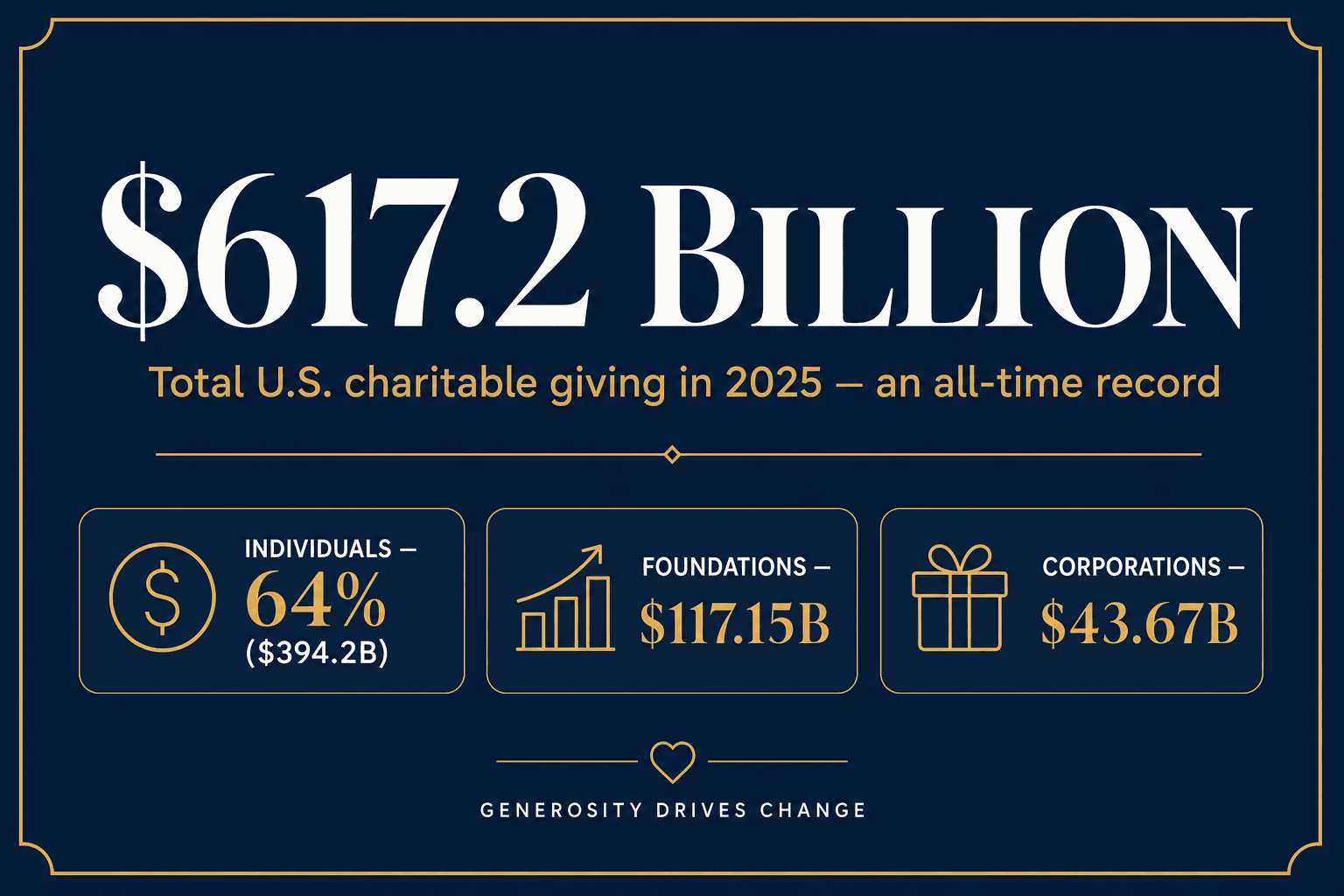
Per Giving USA, education, public-society benefit, and environment and animal organizations each grew more than 11% in current dollars, outpacing the overall rate. Individual donors, the heartbeat of American philanthropy, remained the largest source of giving at $394.2 billion, 64% of the total. Foundations gave $117.15 billion, and corporations gave $43.67 billion, up 3.1%, the slowest-growing source this year.
By every measure, this should feel like a victory lap.
So why does it feel like we’re reading a spreadsheet?
The data tells one story. The field tells another.
Here’s what the numbers don’t capture: the fundraiser who’s afraid to pick up the phone. The board member who treats their seat like a lunch reservation. The nonprofit that spent three years perfecting its digital strategy and forgot to ask anyone for money.
I’ve been in this field for 40 years, from outbound calls for universities and hospitals as a teenager, to working on the first $100 million campaign in North America, to managing $400 million capital campaigns today. The fundamentals haven’t changed: the right person, making the right ask, to the right person, at the right time, for the right amount.
What has changed is how much joy we’ve let drain out of the work. The field has become obsessed with technology, automation, and digital-first strategies, and in doing so has lost the relational warmth that makes philanthropy…philanthropy. Endless board meetings. AI-first approaches. Endless data pulls. Somewhere in all of it, we stopped talking to donors like human beings who care about something.
The wealth transfer is here. Are we ready?
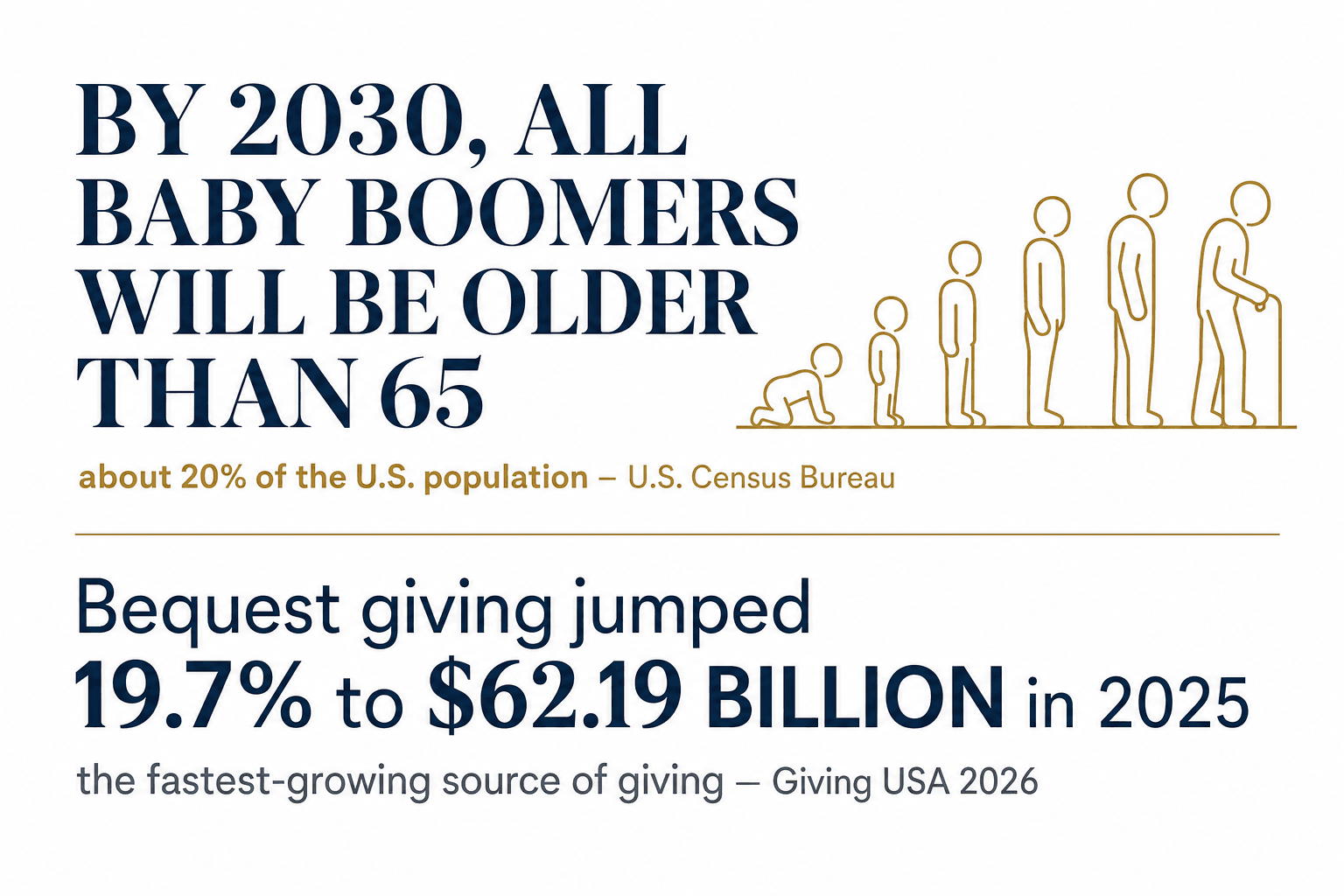
The U.S. population is aging at a historic pace. By 2030, all Baby Boomers will be older than 65, making up about 20% of the country. The national median age has already reached 39.1 years, driven by low birth rates, longer life spans, and the aging of the post-WWII generation, according to the U.S. Census Bureau.
That demographic shift is exactly why Giving USA 2026 confirms a signal that deserves far more attention than it’s getting: bequest giving jumped 19.7% to $62.19 billion in 2025, the fastest growth of any giving source. The great wealth transfer that’s been predicted for decades isn’t a future event anymore. It’s the generation already turning 65, and it’s materializing right now.
And yet the sector hasn’t built relationships with the heirs. Donor kids have been largely ignored. There’s been no systematic effort to bring the next generation into the conversation.
This is the gap between what the numbers celebrate and what the field is actually doing. We’re benefiting from a wealth transfer we didn’t cultivate. Imagine what happens when we do.
The real problem: we’ve stopped asking
In a recent conversation with a client, I posed a simple question: What does your organization do between now and when your major gift officer is hired?
The answer, too often, is nothing.
Organizations that stopped asking during COVID lost donors to other nonprofits. Lower-end donors are pulling back, but mid-level and major gift donors are holding steady. The donors are there. The capacity is there. The willingness is there.
What’s missing is the ask.
I’ve said it from stages and in boardrooms: the number one reason donors don’t give is that nobody asked them. Once a donor takes the meeting, they’re interested. It’s the fundraiser’s to lose. Talk less. Listen more. Identify the “yes” you need, and stop.
What happens when we find the love again
I grew up poor in Newark, raised by a single mother working three jobs. She gave to the church and to neighbors regardless of what she had. I didn’t recognize it as philanthropy until years into my career. But that’s exactly what it was: love in action.
That’s what fundraising is supposed to feel like. If both sides believe in the cause, the ask should feel good. Not transactional. Not algorithmic. Good.
The real reward isn’t the pledge card. It’s seeing a student get their first college opportunity. It’s watching someone regain stability because a nonprofit showed up. The impact stories are the point, and they’re also the most powerful fundraising tool we have.
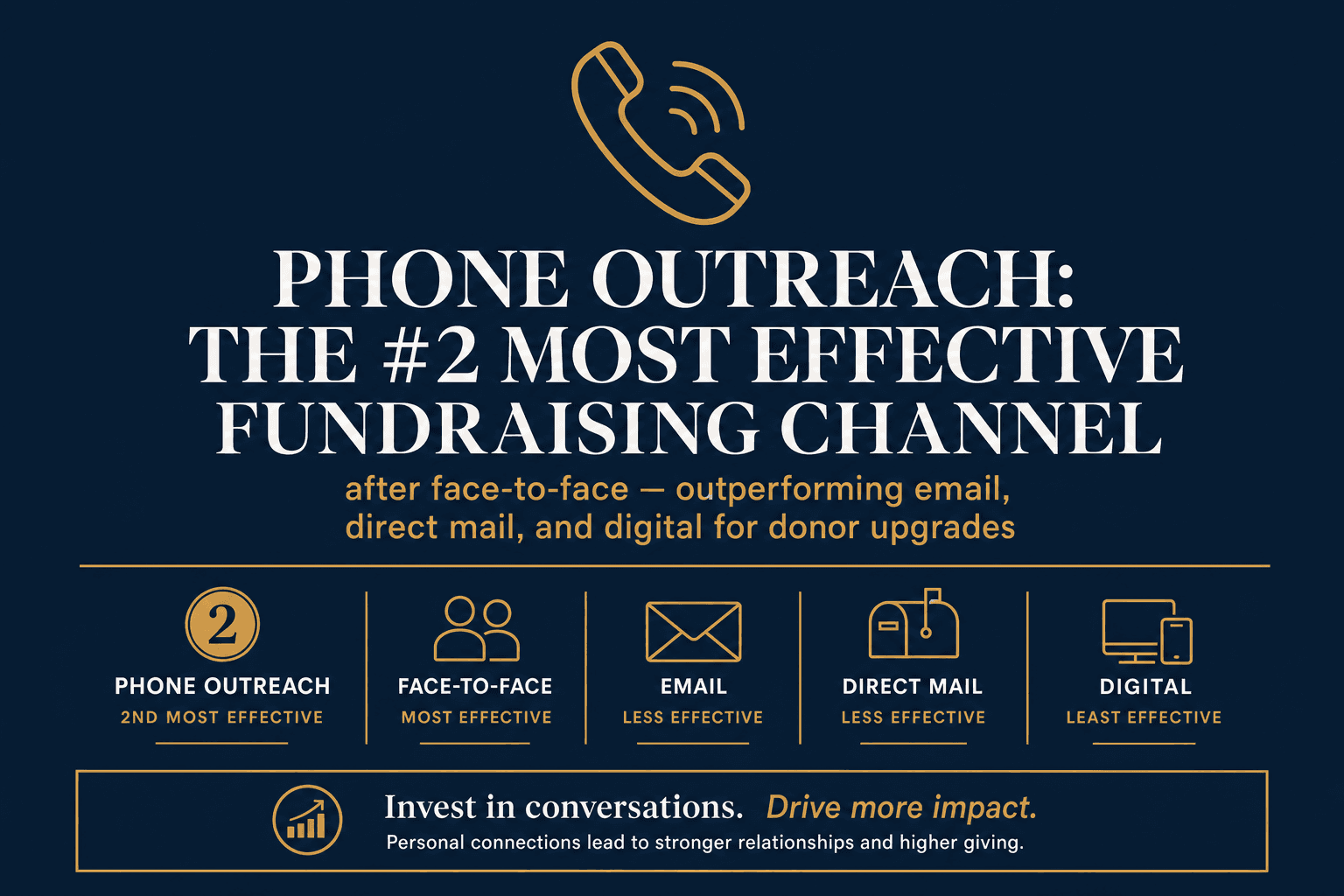
Phone outreach remains the second most effective fundraising channel after face to face. Email, direct mail, and digital cannot replicate the upgrade rates that come from a real human conversation. The donors reached in our programs were warm and positive, with strong personal connections to the mission and genuine interest in giving and volunteering. They just needed someone to call.
Three things to do with this moment
Giving USA 2026 isn’t just a report. It’s an invitation. Here’s how to answer it.
- Stop hiding behind data and start having conversations. Wealth screening and AI tools are useful, but they’re preparation, not the work. The work is the relationship. Use the data to get in the room. Then put it down.
- Invest in the next generation of donors, now. The wealth transfer is underway, and bequest giving’s 19.7% jump proves it. With all Baby Boomers projected to be over 65 by 2030, the heirs of your major donors are out there today, not someday. If you haven’t introduced yourself, someone else will. Legacy giving programs, next-gen engagement events, and simple conversations with donor families are not optional anymore.
- Reconnect with why you do this. A professional fundraiser’s job is to take a donor’s belief in a cause and connect it to a compelling human need. That’s not a technical skill. It’s an act of love, translated into a strategy.
The numbers in Giving USA 2026 are good, great even. But they’re not the story. The story is what we do next: whether we treat this record year as validation to keep coasting, or as a wake-up call to get back on the phone, back in the room, and back to why we started.
The donors are ready. The wealth transfer is happening whether we participate or not. The only open question is whether our profession shows up for it.
Want help building a legacy giving and next-generation donor strategy before the wealth transfer passes your organization by? Start a conversation with Catapult Fundraising.
Sources: Giving USA 2026, The Annual Report on Philanthropy for the Year 2025, published by Giving USA Foundation and researched by the Indiana University Lilly Family School of Philanthropy. Population and median age data from the U.S. Census Bureau.