By Anthony R. Alonso, President and CEO, Catapult Fundraising

Most organizations have a plan for major donors and a plan for the annual fund. The people in between get a little of each, which usually means form letters and a renewal appeal.
Those are your mid-level donors. They’re loyal, they have capacity, and most of them have never had a real conversation with anyone at your organization.
Who your mid-level donors are
Don’t start with a dollar band you read somewhere. For one organization, mid-level is the $1,000 donor. For another, it’s $5,000. Here’s the definition I use: anyone who gives more than the average gift to your annual fund but isn’t assigned to a major gift officer.
Then look inside that group. Some are ready for an upgrade. Some are your loyal core who’ve given for years. Some are at risk and quietly slipping away. Each needs a slightly different plan.
Treat them like major gift prospects
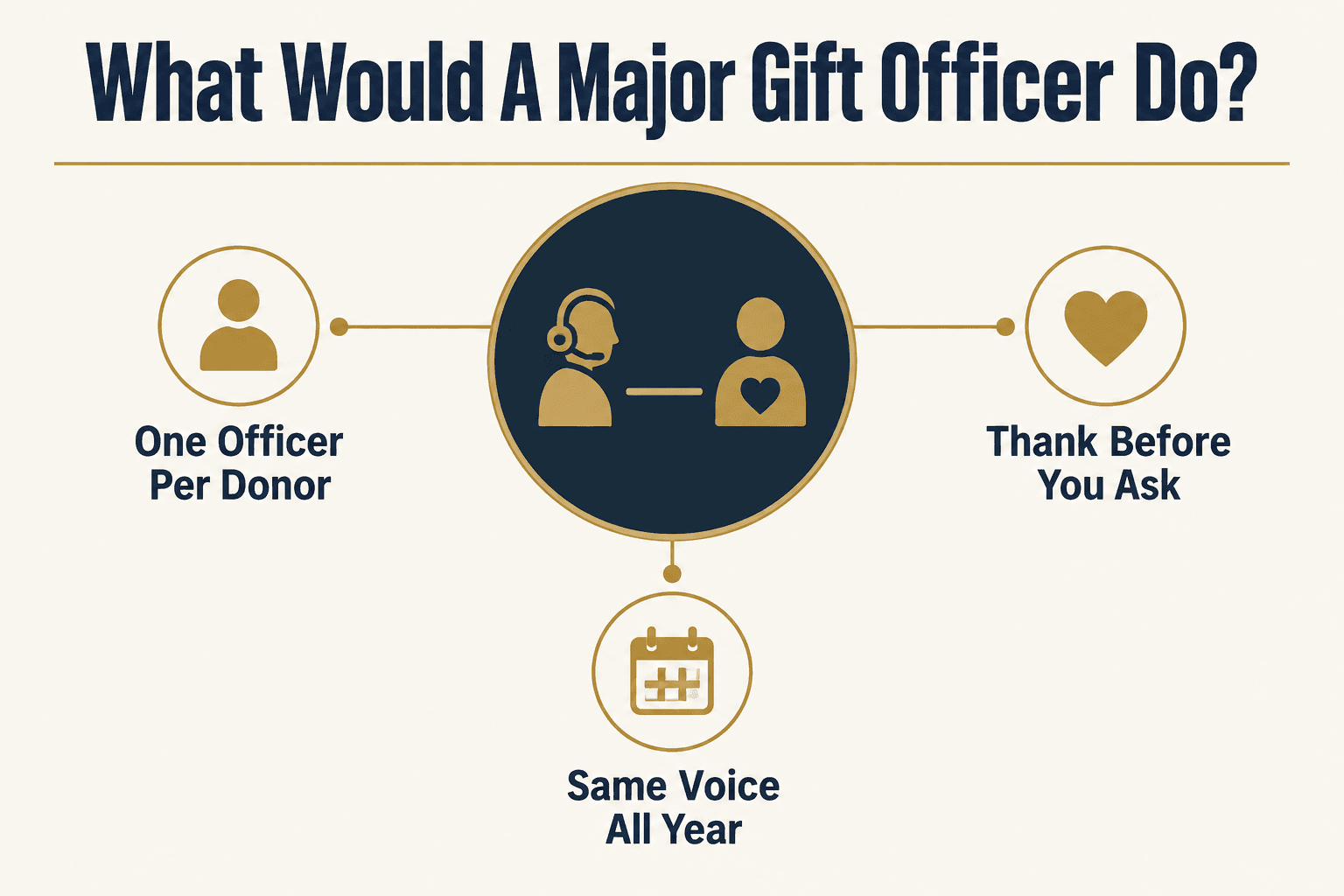
Here’s the question I ask every development team: what would you do if a major gift officer were working your mid-level donors? You’d assign one person to each donor. You’d thank them before you asked again. You’d learn what they care about. And you’d make an ask that fit.
That’s the whole idea. In our programs, the same engagement officer stays with each donor for the entire year. There’s no handoff to a different caller. The donor hears the same voice, and that officer becomes the major gift officer for the mid-level journey, carrying a portfolio of roughly 300 to 500 donors.
The touches that matter
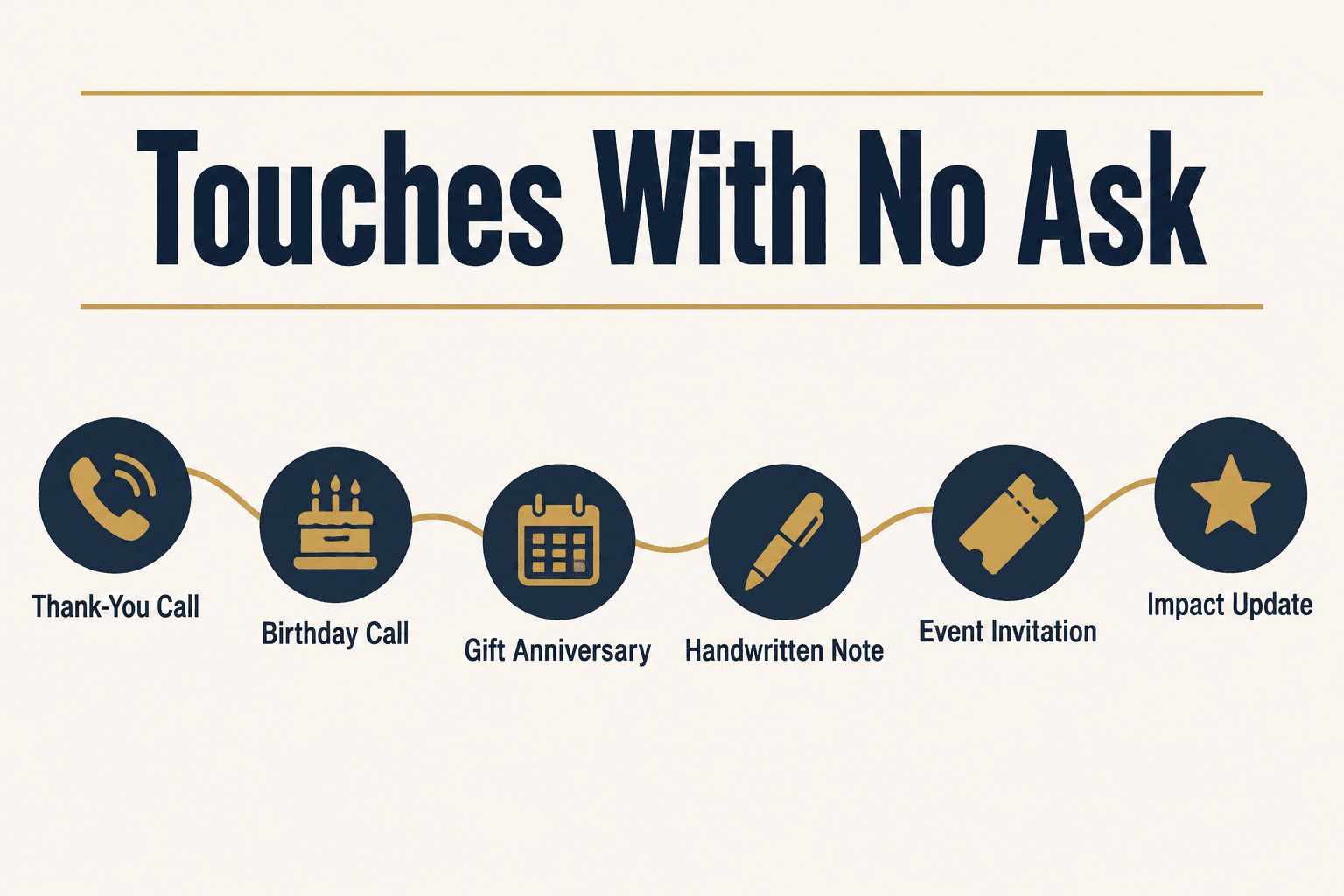
Before anyone asks for an upgrade, give each donor at least five to seven touches during the year. Our programs use seven to eight. None of these include an ask.
- A thank-you call. No ask, no strings attached. Just thank you.
- A birthday call. Call them on their birthday and wish them a happy birthday. That’s it.
- A gift-anniversary call on the date of their first gift.
- A handwritten note. A real one, not a printed font that looks like handwriting.
- An invitation to an event, and a follow-up call afterward.
- An impact update: “We wanted to call and let you know what your giving is doing.”
If you don’t have the staff for all of that, start with what I call Five by Ten. Call five mid-level donors by ten o’clock every morning, just to thank them. Over a year, that’s more than a thousand thank-you calls.
Then make the upgrade ask
After a year of real attention, the ask doesn’t feel like a cold solicitation. It feels like the next step in a relationship.
Make the ask specific to the donor, and make it easy to say yes to a bigger number. Someone who gave $1,000 might be asked to consider $4,000, paid in quarterly installments over the year. If they come back at half of that, you’ve still doubled their giving.
$1,000 donor → $4,000 ask in quarterly installments → $2,000 gift = 100% upgrade
Listen for the signals
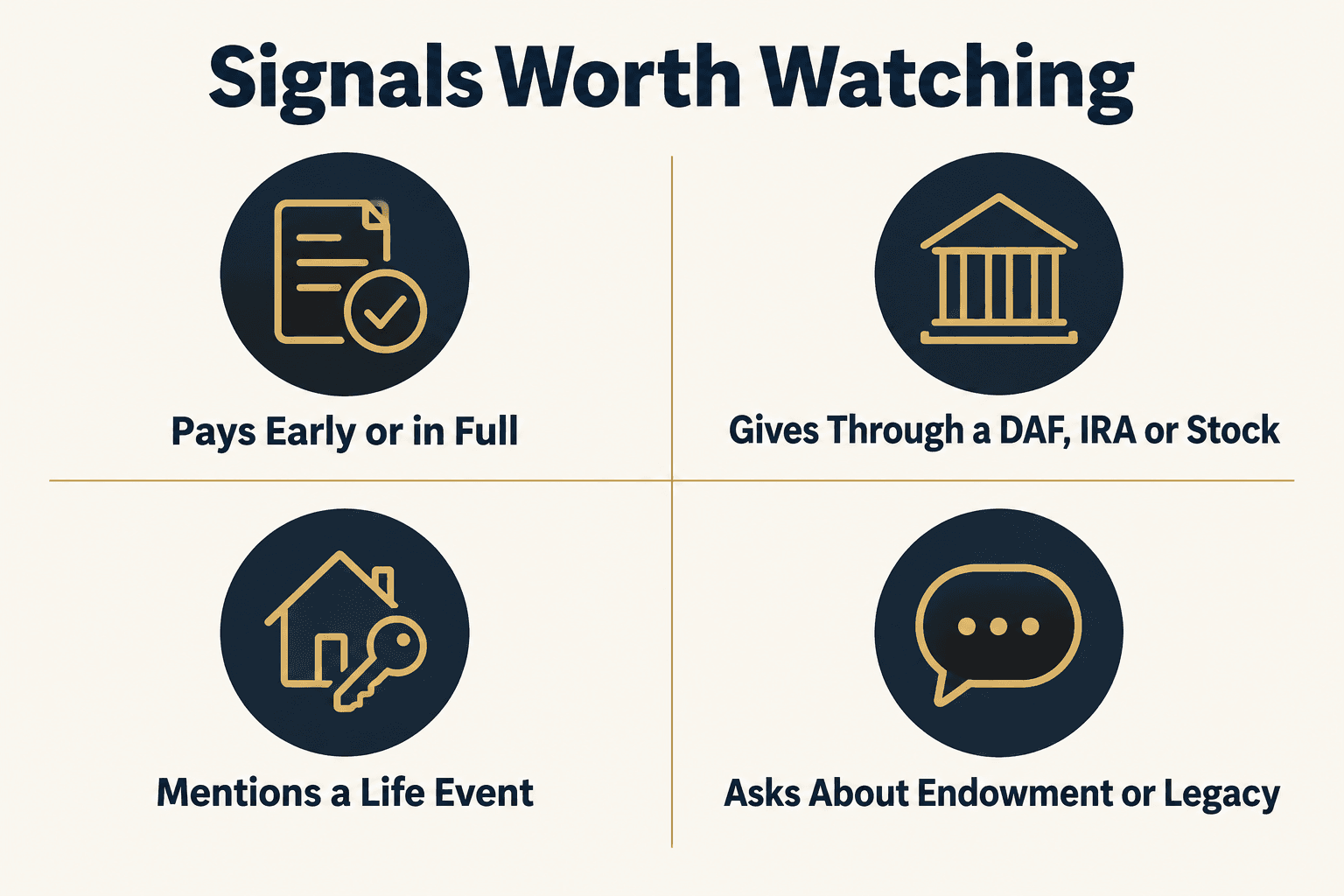
Good engagement isn’t only about giving more. It’s about learning who’s ready for a bigger conversation. Pay attention when a donor:
- Pays a pledge early or in full
- Gives through a donor-advised fund, an IRA, stock or a family foundation
- Mentions a life event, such as retiring, selling a business or downsizing
- Asks about endowment, naming or planned giving
Even a $100 gift from a donor-advised fund tells you that donor has assets to give from. That donor has raised their hand. When those signals show up, make a warm handoff to your major gift officer. Never a cold transfer. One mid-level handoff in our programs turned into a $2.15 million gift.
What the results look like
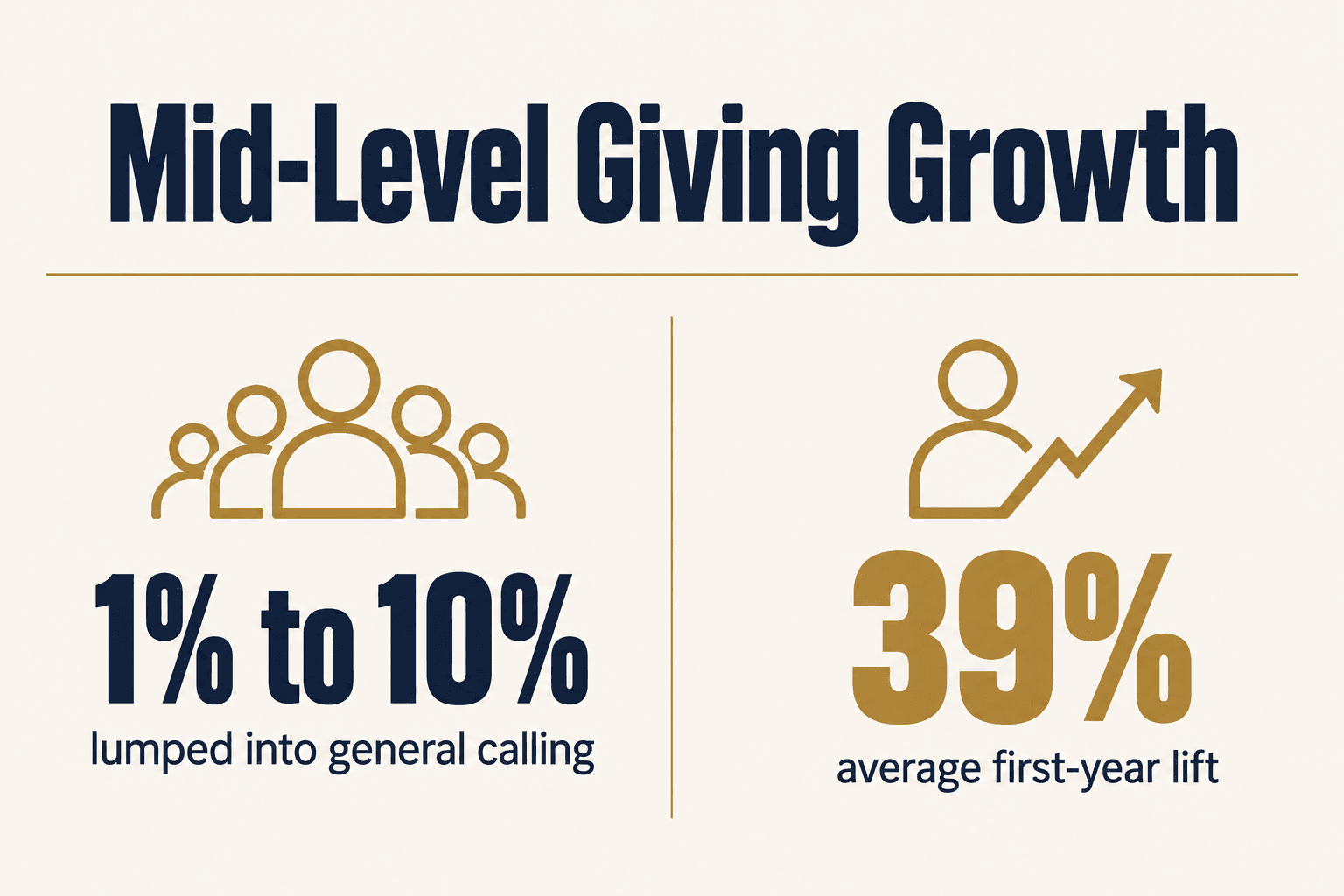
Across our client programs, mid-level donors increase their giving by an average of 39% in the first year, and some clients have seen giving more than double. Compare that with the 1% to 10% lift we typically see when mid-level donors are simply lumped into a general annual fund calling program.
Donor loyalty isn’t about the donor being loyal to us. It’s about us being loyal to the donor.
Where to start
Run a simple report: every donor above your average annual fund gift who isn’t in a major gift portfolio. Count them. Then ask how many got a call this year that didn’t include an ask.
That number tells you how much opportunity is sitting in the middle of your file. If you want help building the journey, here’s how our mid-level donor program works, or start a conversation.
Questions we hear
- What is donor engagement?
- Donor engagement is everything you do to build a relationship with a donor between gifts: thanking them, keeping them informed, inviting them in and listening. Good engagement makes the next ask feel like a natural next step.
- How do you define a mid-level donor?
- Anyone who gives more than your average annual fund gift but isn't assigned to a major gift officer. The dollar range depends on your organization.
- How many touches should a mid-level donor get?
- At least five to seven a year before an upgrade ask: a thank-you call, birthday call, gift-anniversary call, handwritten note, event invitation and impact update. Catapult's programs use seven to eight.
- How much can a mid-level program increase giving?
- Across Catapult's client programs, mid-level donors increase giving by an average of 39% in the first year, and some clients have seen giving more than double.
Average first-year increase and handoff examples come from Catapult Fundraising mid-level program results across client files. Client figures come from Catapult Fundraising program reports. Clients are named only where they have been publicly identified by Catapult; others are described by type.